
Before semaglutide, the best a metabolic research compound could reliably produce was around 5 to 6% body weight reduction. That was the ceiling. Semaglutide moved it to 15%. That shift made it the most important reference point in metabolic research and the benchmark every newer compound has been measured against since. But the weight loss story, as significant as it is, may not be the most interesting thing about semaglutide. Researchers studying its effects on the brain, the liver, the kidneys, and addiction pathways are finding that the same receptor mechanism that controls appetite appears to do considerably more than anyone initially expected. For foundational context on how the GLP-1 receptor class works, see what GLP-1 peptides are.
Semaglutide: Key Research Facts
- Semaglutide is a synthetic GLP-1 analog engineered with a fatty acid chain modification that extends its half-life to approximately seven days, enabling once-weekly dosing in sustained research models.
- Large-scale weight loss research established average body weight reductions of around 15% over 68 weeks, setting the benchmark all subsequent metabolic compounds are now measured against.
- A major cardiovascular outcomes study involving over 17,000 participants across nearly four years showed a 20% reduction in serious cardiac events. No other GLP-1 compound has produced a comparable dataset yet.
- Semaglutide gained FDA approval for metabolic liver disease in 2025, the first GLP-1 compound approved for that indication.
- Emerging research is investigating semaglutide's effects on neurological function, addiction signaling, and kidney disease, areas well beyond its original metabolic context.
What Is Semaglutide and How Does It Work?
Your body already makes a version of semaglutide. It is called GLP-1, and your gut releases it every time you eat. It tells your pancreas to release insulin, signals your brain to stop eating, and slows digestion so nutrients are absorbed more gradually. The problem is it disappears from your bloodstream in about two minutes. That is not long enough to do much.
Semaglutide is a synthetic version of that same molecule, engineered to last. A structural modification binds it to a protein called albumin, which extends its active window from two minutes to approximately seven days. That is the core innovation behind once-weekly dosing and what makes it practical for sustained research models in a way that earlier compounds were not.
Once active, it works across several systems at the same time. In the pancreas, it boosts insulin release in response to food and dials back glucagon, the hormone that raises blood sugar. In the brain, it activates pathways that reduce hunger and increase the feeling of fullness. In the stomach, it slows how quickly food moves through, which smooths out blood sugar spikes after meals.
That combination is why researchers studying semaglutide keep finding effects beyond blood sugar alone. The same receptor activity that moderates insulin also influences body weight, cardiovascular markers, and neurological endpoints that are still being mapped. For a broader look at how this entire class of compounds operates, see how GLP-1 peptides work.
Semaglutide is also the only GLP-1 compound studied at scale in both injectable and oral forms. The PIONEER trial program established an oral 14mg dose as the first clinically effective oral GLP-1 delivery system, opening a new line of research into non-injectable peptide delivery for metabolic endpoints. For a full look at the bioavailability challenges that make oral peptide delivery so difficult and what the research shows on solving them, see oral peptides research: the bioavailability challenge.
The Benchmark: What the Weight Loss Data Actually Shows
To understand why semaglutide matters as a research compound, you need to understand what the weight loss landscape looked like before it. Earlier GLP-1 compounds produced around 5 to 6% body weight reduction. That was considered a meaningful result. Semaglutide produced around 15% average body weight reduction over 68 weeks. That is not a modest improvement on what came before. It is a different category of result entirely.
The consistency of those results across different populations is what makes semaglutide the reference point it is. Across multiple large studies, the weight loss data holds. The longest observation window, over two years, showed the reduction was sustained. A direct comparison against the previous generation GLP-1 compound showed roughly 15% versus 6%, a gap large enough to make clear that semaglutide was not just incrementally better. The difference was meaningful enough to shift what researchers considered achievable through receptor-based metabolic signaling.
One finding that shapes how researchers design long-term metabolic studies came from discontinuation data. Participants who stopped semaglutide regained approximately two-thirds of their lost weight within one year. That result established that semaglutide’s effects depend on continued receptor engagement and made long-term dosing protocols a central focus of ongoing research. For the full picture of why weight loss slows during active dosing and what happens when any compound in this class is stopped, see why GLP-1 weight loss plateaus.
The Cardiovascular Data Nobody Else Has
Tirzepatide produces more weight loss than semaglutide. That is well established. But there is one category where semaglutide holds a significant and currently unmatched advantage, and it matters for a large portion of metabolic research.
A large cardiovascular outcomes study enrolled over 17,000 adults with obesity and established heart disease but no diabetes requirement, and followed them for nearly four years. It showed a 20% reduction in serious cardiac events including heart attack, stroke, and cardiovascular death. That was the first time any GLP-1 compound demonstrated that level of cardiovascular benefit in obese adults without diabetes, and it led to semaglutide being specifically approved for cardiovascular risk reduction in that population.
What made the finding particularly significant is that the cardiovascular benefit did not appear to operate purely through weight loss. Analysis suggested semaglutide was producing anti-inflammatory effects, improving blood vessel function, and reducing blood pressure independently of weight change. Those are mechanisms separate from appetite suppression and they open research questions that are still being actively investigated.
Tirzepatide does not have an equivalent long-term cardiovascular study yet. For researchers studying heart and metabolic endpoints specifically, semaglutide has a depth of evidence that newer dual and triple agonist compounds cannot currently match. That distinction changes which compound is the appropriate research tool depending on the question being studied. For the full comparison of how these two compounds differ, see tirzepatide vs semaglutide.
What Researchers Did Not Expect: Semaglutide Beyond Metabolism
The GLP-1 receptor was originally studied as a metabolic target. Insulin, blood sugar, appetite. That was the framework. What researchers have discovered is that the same receptor is expressed in tissues and brain regions that have nothing to do with digestion, and activating it appears to produce effects that nobody was initially looking for.
The neurological research is the most striking. GLP-1 receptors are found in areas of the brain associated with memory, inflammation, and reward processing. That distribution has led researchers to investigate semaglutide in the context of neurological conditions including Alzheimer’s and Parkinson’s disease. Results so far are mixed, with some improvements in disease-related biological markers but no clear slowing of clinical progression in the largest studies to date. The research is ongoing and the mechanistic questions remain open.
The addiction research is particularly interesting and almost completely absent from mainstream semaglutide coverage. A 2025 study published in a leading psychiatry journal found that semaglutide reduced alcohol cravings and weekly consumption in adults with alcohol use disorder. The working hypothesis is that GLP-1 receptor activation in the brain’s reward circuits reduces the reinforcing value of addictive substances, not just food. Researchers are now investigating similar effects with other substances. That is a research direction nobody anticipated when semaglutide was first developed.
Beyond the brain, semaglutide received approval for metabolic liver disease in 2025, the first GLP-1 compound to reach that milestone. Research into kidney disease progression is also active. The pattern across all of these areas is the same. A receptor originally understood as a metabolic tool appears to have a far wider tissue distribution and a broader range of effects than early research suggested. For context on how this expanding frontier connects to the broader peptide research landscape, see peptides and weight loss.
Where Semaglutide Sits in the Research Landscape Now
Semaglutide is no longer the compound producing the largest effect sizes in metabolic research. Tirzepatide outperformed it in head-to-head data. Retatrutide is producing results above 28% average body weight reduction in Phase 3 studies. In terms of weight loss magnitude, semaglutide is now the floor rather than the ceiling.
That is not a diminishment. It is a repositioning. Semaglutide’s value in current research comes from what no newer compound can yet offer: depth of evidence. Nearly four years of cardiovascular follow-up. Approval across weight management, diabetes, cardiovascular risk reduction, and metabolic liver disease. The longest and largest safety observation dataset in the GLP-1 class. And an expanding research frontier in neurology, addiction, and kidney disease that is still in early stages.
That depth of evidence is also what makes semaglutide the reference compound for aging-cohort research, where longer observation windows and more complex metabolic baselines demand a compound with established long-term data. This intersection is covered in more depth in GLP-1 peptides and metabolic aging in men over 50. For the specific hormonal dimension of that same intersection, including HPG axis biology and how testosterone markers shift during GLP-1 protocols, see testosterone, GLP-1, and metabolic research in aging men.
For researchers, that makes semaglutide the most versatile reference compound in the incretin class. It is the baseline that gives every newer result meaning. A 28% weight loss figure from retatrutide only carries the weight it does because researchers know exactly what semaglutide’s 15% looks like across tens of thousands of participants over years of observation. Understanding semaglutide is prerequisite to understanding where the field is going. For context on the next generation of triple agonist compounds building on this foundation, see the retatrutide research overview. For a full breakdown of the technical vocabulary used across GLP-1 and incretin research, including terms like receptor agonism, half-life, albumin binding, and pharmacokinetics, see understanding peptide research terminology.
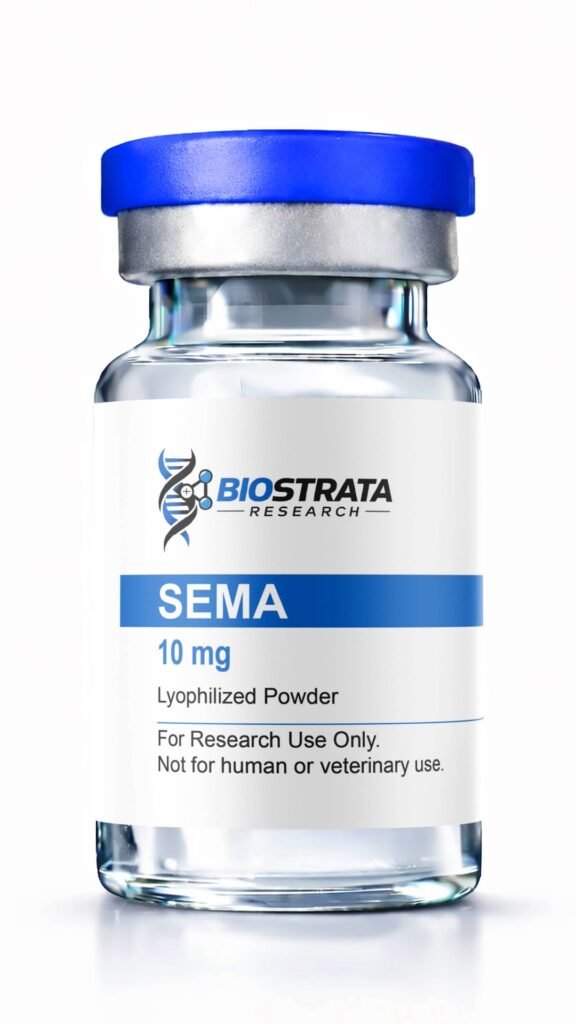
BioStrata Research supplies semaglutide 10mg as a verified research-grade compound with full batch-specific analytical documentation. For researchers working across the GLP-1 and dual agonist landscape, tirzepatide 10mg is also available. All products are strictly for laboratory research use only.
FAQ's,Semaglutide Research
How Semaglutide Works in the Body
Semaglutide mimics a hormone your gut naturally releases after eating called GLP-1. It signals your brain to reduce appetite, tells your pancreas to release insulin in response to food, and slows digestion to keep blood sugar more stable. A structural modification extends its active window to approximately seven days, which is why once-weekly dosing works.
Weight Loss Research Benchmarks
Large-scale research showed average body weight reductions of around 15% over 68 weeks in adults with obesity. About half of participants achieved 15% or more. Results vary based on dose, baseline metabolic health, and how the escalation protocol is followed. That 15% figure is now the reference point all newer metabolic compounds are benchmarked against.
Semaglutide vs Tirzepatide
Semaglutide targets only the GLP-1 receptor. Tirzepatide adds GIP receptor activation, which produces greater weight loss in head-to-head data. But semaglutide has nearly four years of cardiovascular outcomes data across over 17,000 participants. Tirzepatide has no equivalent long-term cardiovascular study yet. Which compound is more relevant depends entirely on the research endpoint being studied.
Common Side Effects in Research
Nausea, diarrhea, vomiting, and constipation are the most frequently reported, concentrated during the dose escalation phase and resolving in most participants once the body has adjusted to the maintenance dose. These are mechanistically predictable, not random. Slowing gastric emptying is part of how semaglutide works and the gut adapts over time. For a full breakdown across the GLP-1 class, see GLP-1 peptides: common side effects observed in research.
What Happens After Stopping Semaglutide
Discontinuation data showed participants regained approximately two-thirds of lost weight within one year of stopping. The metabolic effects of semaglutide depend on continued receptor engagement. When the compound clears, appetite signaling returns toward baseline and the body’s hormonal set point defense drives weight regain. The full biology of that process is covered in what happens when you stop peptides.
Expanding Research Beyond Metabolism
Yes, and the scope is broader than most coverage suggests. Active research areas include neurological conditions, alcohol use disorder and addiction signaling, metabolic liver disease for which semaglutide received FDA approval in 2025, and kidney disease progression. The GLP-1 receptor’s presence in brain regions and organ systems beyond the gut is driving a significant expansion of the research agenda well beyond its original metabolic context.
- CONTINUE LEARNING
Explore Related Peptide Topics
Continue building your understanding by exploring related foundational peptide topics.
- Once-Weekly Semaglutide in Adults With Overweight or Obesity (STEP 1 Trial) — New England Journal of Medicine
- Two-Year Effects of Semaglutide in Adults With Overweight or Obesity (STEP 5 Trial) — Nature Medicine
- Semaglutide and Cardiovascular Outcomes in Obesity Without Diabetes (SELECT Trial) — New England Journal of Medicine
- Long-Term Weight Loss Effects of Semaglutide Over Four Years — Nature Medicine
- Discovery and Development of Liraglutide and Semaglutide as GLP-1 Receptor Agonists — PMC
- Mechanism of Action of Semaglutide — PMC
- Medications Containing Semaglutide: Regulatory and Safety Information — FDA