
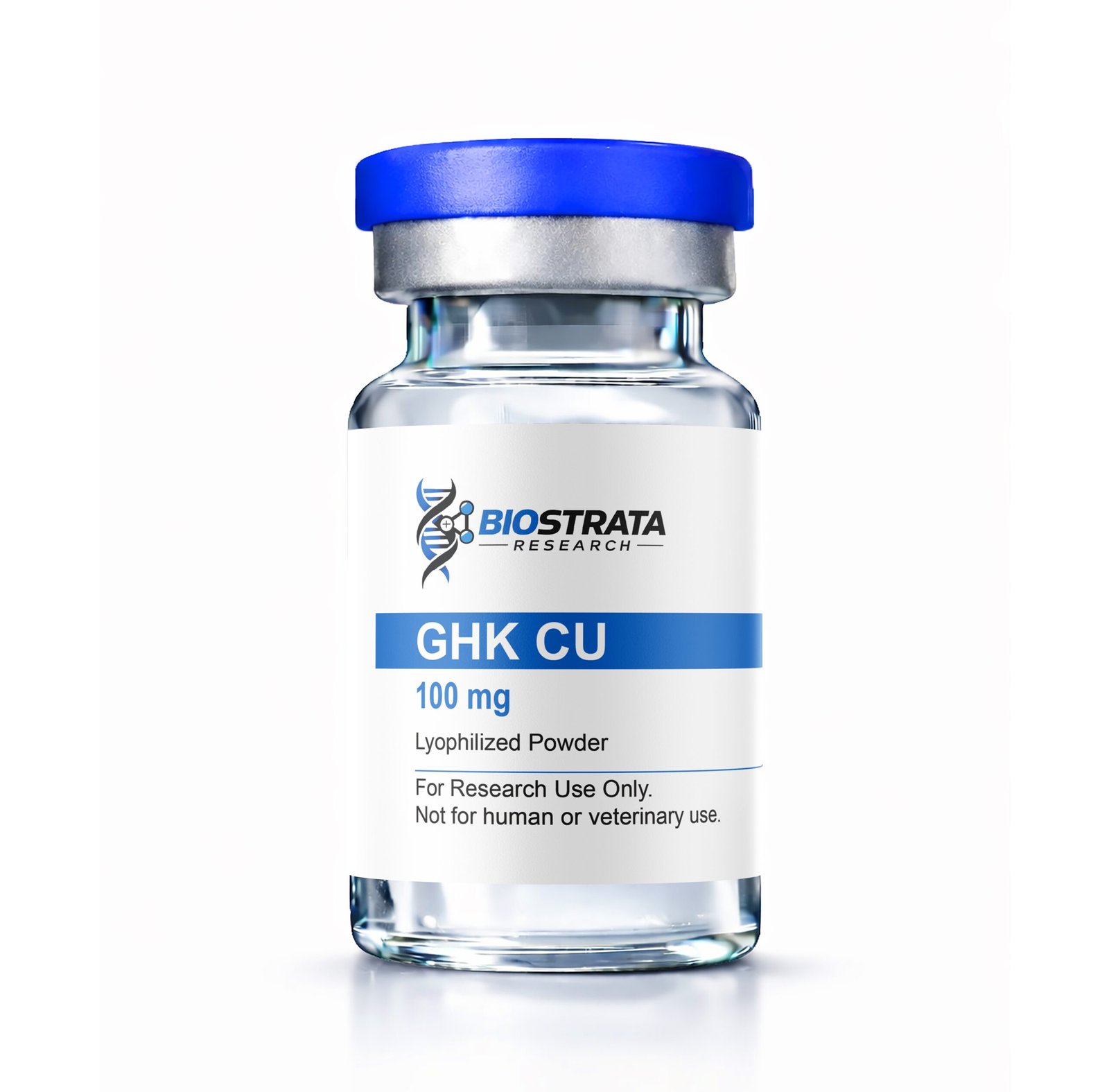
Description
Research Overview
GHK-Cu (Glycyl-L-Histidyl-L-Lysine Copper) is a naturally occurring copper-binding tripeptide first isolated from human plasma in 1973. It has a high affinity for Cu2+ ions and forms a stable copper complex found endogenously in plasma, saliva, and urine, with plasma concentrations declining significantly with age.
In controlled laboratory settings, GHK-Cu is studied as a multifunctional signaling peptide with well-documented roles in collagen and elastin synthesis, tissue repair biology, dermal fibroblast function, angiogenesis, and antioxidant gene expression.
Explore related peptide research in our Research Library, or dive deeper into the full GHK-Cu Research Overview.
Scientific Background
GHK-Cu is among the most extensively characterized peptides in regenerative and skin biology, with over four decades of peer-reviewed research. It stimulates the synthesis of collagen, elastin, and glycosaminoglycans in skin fibroblast models, activates angiogenesis through upregulation of VEGF and bFGF expression, and modulates the expression of metalloproteinases (MMPs) and their tissue inhibitors (TIMPs).
Gene expression profiling using the Broad Institute’s Connectivity Map has shown that GHK-Cu influences a large number of human genes, including those involved in antioxidant response, DNA repair, and inflammatory signaling pathways. This suggests broad genomic regulatory activity beyond its well-known extracellular matrix effects.
Molecular Information
- Peptide Type: Copper-binding tripeptide (naturally occurring)
- Composition: Glycyl-L-Histidyl-L-Lysine complexed with Cu2+
- Amino Acid Length: 3 amino acids
- Source: Naturally present in human plasma, saliva, and urine
- Research Classification: Regenerative biology and skin research compound
Quality & Compliance
Each batch undergoes analytical verification to confirm identity and purity, and batch-specific Certificates of Analysis (COA) are maintained for every production run. This product is supplied strictly for laboratory research and is not for human or veterinary use.
Reviews
There are no reviews yet.