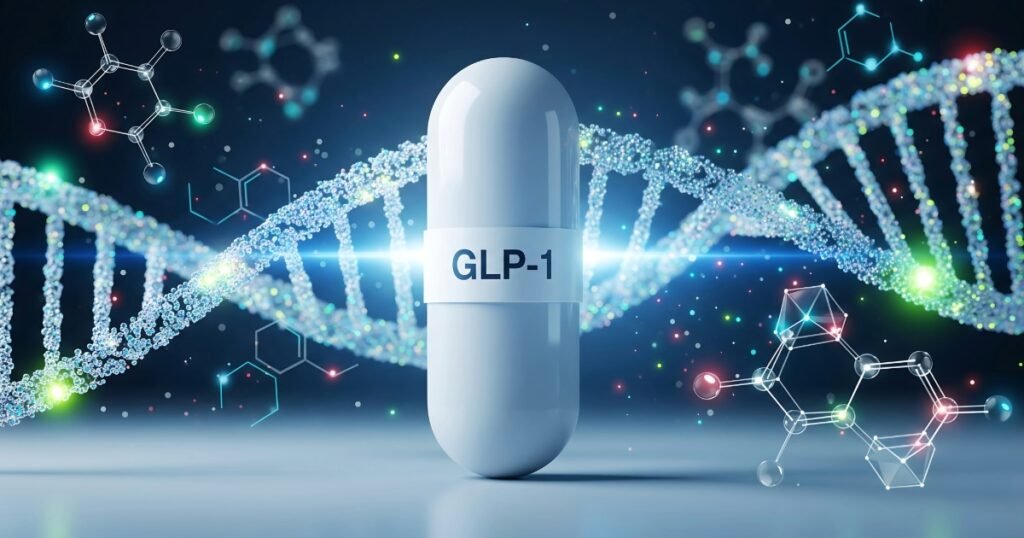
For most of peptide research history, injectable delivery was the only practical option. The digestive system is specifically designed to break amino acid chains apart. The stomach and small intestine treat an orally administered peptide the same way they treat dietary protein: enzymes target it, cleave the bonds, and absorb individual amino acids rather than the intact molecule. That biological reality made oral peptide delivery seem impossible for decades. What changed is one of the more compelling stories in modern pharmaceutical science. This article covers why oral delivery is so difficult, how researchers solved it, and where the field is heading. For broader context on how peptides behave once
Key Research Facts: Oral Peptides Research
- Oral bioavailability for most unformulated peptides is below 1%, because gastric acid, proteolytic enzymes, and poor membrane permeability all degrade or block intact peptide absorption
- SNAC is the most clinically validated oral peptide absorption enhancer — it creates a locally elevated pH microenvironment in the stomach that protects peptides from acid degradation while facilitating gastric mucosal absorption
- Oral semaglutide achieves approximately 1% bioavailability via SNAC — low compared to injectable but sufficient given semaglutide's receptor potency, proving the concept workss
- The oral peptide pipeline in 2026 is the most active in the field's history — candidates include oral tirzepatide formulations, oral GLP-1/GIP dual agonists, and once-monthly oral dosing programs
- Oral delivery research strategies include absorption enhancers, enzyme inhibitors, structural modification of the peptide itself, and nanoparticle or liposomal encapsulation
Why Peptides Do Not Survive the Digestive System
The gastrointestinal environment a peptide encounters when swallowed is hostile by design. The stomach produces hydrochloric acid that drops pH to approximately 1.5 to 3.5, an environment that denatures most peptides rapidly. Even peptides that survive gastric acid face a second barrier in the small intestine, where proteolytic enzymes including pepsin, trypsin, and chymotrypsin systematically cleave peptide bonds. Brush border enzymes on the intestinal wall add a third layer of degradation at the exact point where absorption would need to occur.
Beyond enzymatic destruction, there is the absorption problem. Even a peptide that somehow survived the full digestive tract would face the intestinal epithelium, a tightly regulated barrier designed to prevent large molecules from entering the bloodstream without controlled transport. Most peptides are simultaneously too large and too water-soluble to passively diffuse across this barrier, and the active transport systems that handle small molecules and individual amino acids do not accommodate intact peptide chains.
The combined effect is why oral bioavailability for most peptides is below 1% without protective formulation. The digestive system does not distinguish between a research peptide and a piece of chicken. Both are chains of amino acids, and both get broken down the same way. Understanding this is essential context for appreciating how remarkable the oral delivery solutions have been. For researchers working with peptides in any format, the same degradation principles that govern GI survival also affect stability and shelf life in laboratory settings.
How Researchers Solved the Problem
Overcoming oral bioavailability requires addressing multiple problems simultaneously. No single strategy handles all of them, which is why the most successful oral formulations combine approaches.
Absorption enhancers are the most clinically advanced strategy. SNAC is the best example. When an oral semaglutide tablet dissolves in the stomach, SNAC does two things at once: it creates a protective bubble of higher pH around the peptide so stomach acid cannot destroy it, and it helps the intact peptide pass directly through the stomach wall into the bloodstream. This bypasses the intestinal enzymes entirely. The peptide never has to survive the small intestine because it gets absorbed before it gets there. That is an elegant solution to a problem most researchers thought was unsolvable.
Other strategies target different parts of the problem. Enzyme inhibitors temporarily suppress the digestive enzymes that would normally destroy the peptide, buying time for absorption to occur. Structural modification changes the peptide itself, adding protective chemical groups or bending the chain into a ring shape (cyclization) that enzymes have a harder time cutting. Nanoparticle and liposomal encapsulation wrap the peptide inside a protective carrier that survives the digestive environment and releases its contents at the absorption site. The most advanced oral formulations in development combine two or more of these approaches. For how peptide synthesis methods enable these structural modifications, see our advanced research guide.
Oral Semaglutide: The Proof of Concept
The approval of oral semaglutide represented a landmark in peptide science. For the first time, a GLP-1 receptor agonist had been successfully delivered orally at a scale sufficient to produce clinically meaningful metabolic effects, something that had been considered practically unachievable for a molecule of semaglutide’s size and water-solubility.
The oral bioavailability achieved through SNAC is approximately 1%, compared to near-complete absorption via subcutaneous injection. On the surface, 1% sounds like a failure. It is not. Because semaglutide is an extremely potent GLP-1 receptor agonist, that 1% produces sufficient plasma concentrations to achieve meaningful receptor activation. This illustrates a principle that applies across oral peptide development: oral delivery does not need to match injectable bioavailability. It needs to achieve sufficient bioavailability for the compound’s potency at its target receptor. A highly potent peptide can tolerate low bioavailability in a way that a less potent one cannot.
The PIONEER clinical trial program established oral semaglutide’s efficacy and safety across multiple populations and fundamentally shifted the field’s understanding of what oral peptide delivery could accomplish. For the full semaglutide research profile including trial data, see our semaglutide research overview. BioStrata carries research grade semaglutide for laboratory use.
The Oral Peptide Pipeline in 2026
Oral semaglutide opened a door that the field is now walking through rapidly. The oral peptide pipeline in 2026 is the most active in the history of the field, and the work is moving in two directions simultaneously.
The first direction is better oral formulations of existing peptide drugs. Several next-generation incretin compounds are in development as oral formulations, including oral versions of tirzepatide and other dual-agonist compounds. Once-monthly oral dosing is an active research goal across multiple programs. If achieved, it would represent another major step in making peptide compounds more practical. For the tirzepatide mechanism and trial data, see our tirzepatide research overview. BioStrata carries research grade tirzepatide for laboratory use.
The second direction is designing entirely new molecules that activate the same receptors as peptides but are not peptides themselves. These small molecule receptor agonists achieve oral bioavailability through their molecular structure rather than through formulation technology. They do not need SNAC or enzyme inhibitors because they are built small and stable enough to survive digestion on their own. This emerging distinction between oral peptides and oral small molecules targeting peptide receptors is one of the most significant developments in the field. Beyond metabolic compounds, oral delivery research is expanding into growth hormone axis peptides and immune-modulating peptides. The formulation technologies proven with incretin oral delivery are broadly applicable across peptide classes. For the broader weight management landscape, see peptides and weight loss.
Why This Matters for Peptide Research
The oral bioavailability challenge is not just a pharmaceutical delivery problem. It is a window into how peptide compounds interact with biological systems and how those interactions can be engineered. The same principles that govern GI degradation govern stability in every other biological environment a peptide encounters: plasma proteases, tissue-resident enzymes, and intracellular degradation machinery all present versions of the same challenge, just in different locations and at different timescales.
The absorption enhancement strategies developed for oral delivery have also informed approaches to transdermal, pulmonary, and nasal peptide administration, each of which involves a biological barrier that must be crossed without compromising peptide integrity. For researchers building fluency in peptide science, the oral bioavailability story is one of the best illustrations of how the field solves problems: iteratively, through a combination of molecular engineering and formulation innovation.
Understanding how peptides are designed and modified to survive hostile biological environments connects directly to understanding how they are studied in scientific research and how GLP-1 peptides work at the receptor level. The progression from injectable-only peptides to oral semaglutide to an active pipeline of oral candidates across multiple classes represents decades of parallel progress in chemistry, formulation science, and clinical pharmacology that is still accelerating.
FAQ — Oral Peptide Research
Can research peptides like BPC-157 or TB-500 be taken orally?
No validated oral delivery formulation exists for BPC-157, TB-500, or most other research peptides. Without protective technology like SNAC or nanoparticle encapsulation, these peptides would be destroyed by stomach acid and digestive enzymes before reaching the bloodstream. Oral semaglutide works because it was specifically engineered with SNAC co-formulation after years of pharmaceutical development. Research peptides supplied in lyophilized form are designed for reconstitution and laboratory use, not oral administration.
Why can’t most peptides be taken orally?
The digestive system is designed to break peptide bonds and extract amino acids. Gastric acid denatures peptides, proteolytic enzymes in the small intestine cleave them systematically, and the intestinal barrier blocks large hydrophilic molecules from entering the bloodstream. The combined result is oral bioavailability below 1% for most unformulated peptides.
How does oral semaglutide work?
Oral semaglutide uses SNAC as an absorption enhancer co-formulated in tablet form. SNAC creates a protective higher pH environment in the stomach that shields semaglutide from acid degradation and helps it pass directly through the stomach wall into the bloodstream, bypassing the intestinal enzymes entirely. The resulting bioavailability is approximately 1%, which is sufficient because semaglutide is potent enough at the GLP-1 receptor to produce meaningful effects at low plasma concentrations.
What is oral bioavailability and why does it matter?
Oral bioavailability is the fraction of an orally administered compound that reaches systemic circulation in active form. For injected peptides it approaches 100%. For most oral peptides without protective formulation it is below 1%. Bioavailability determines what plasma concentration a given dose achieves and whether the compound reaches its target receptor at sufficient levels to produce a measurable effect.
What oral peptide compounds are in development?
The 2026 pipeline includes oral tirzepatide candidates, oral dual agonist formulations, and small molecule compounds designed to activate peptide receptors without being peptides themselves. Once-monthly oral dosing is an active research objective across multiple programs. Oral delivery research is also expanding beyond metabolic compounds into growth hormone axis and immune-modulating peptide categories.
Will oral delivery replace injectable peptides?
Not entirely. Oral delivery trades convenience for bioavailability. Injectable peptides achieve near-complete absorption and precise dosing. Oral peptides require higher doses to compensate for low absorption and introduce more variability between subjects. For highly potent compounds where low bioavailability is sufficient, oral delivery is viable. For compounds requiring precise dosing or high plasma concentrations, injectable delivery will likely remain the standard research format.
- CONTINUE LEARNING
Explore Related Peptide Topics
Continue building your understanding by exploring related foundational peptide topics.
References & Sources
- Therapeutic Peptides: Current Applications and Future Research Directions — Signal Transduction and Targeted Therapy (2022)
- Automated Solid-Phase Peptide Synthesis for Therapeutic Peptide Development — Beilstein Journal of Organic Chemistry (2014)
- Oral Semaglutide in Type 2 Diabetes: PIONEER 1 Randomized Clinical Trial — JAMA Internal Medicine (2019)
- Bioactive Peptides: Synthesis, Sources, and Mechanisms of Action — Molecules (2022)
- Introduction to Peptide Synthesis and Solid-Phase Methodology — Current Protocols in Molecular Biology (2012)
Disclaimer: BioStrata Research provides materials for laboratory research use only. The information in this article is intended strictly for educational and informational purposes within a research context and should not be interpreted as medical advice, treatment guidance, or product claims for human use.