
BPC-157 is one of the most searched peptides in research communities, and for good reason. It has one of the deepest preclinical research records of any compound in the regenerative biology space, with hundreds of published studies examining how it affects tissue repair, tendon healing, gut protection, and vascular biology. Three decades of research across independent laboratories have produced findings consistent enough to sustain serious scientific interest.
This overview covers what BPC-157 is, what the research actually shows about how it works, and where the science currently stands. All research discussed here was conducted in laboratory and animal models. BPC-157 is classified as Research Use Only and has not been approved by the FDA as a medicine. For the latest on its research trajectory heading into 2026, see BPC-157 in 2026: three decades of research and the question that still hasn’t been answered.
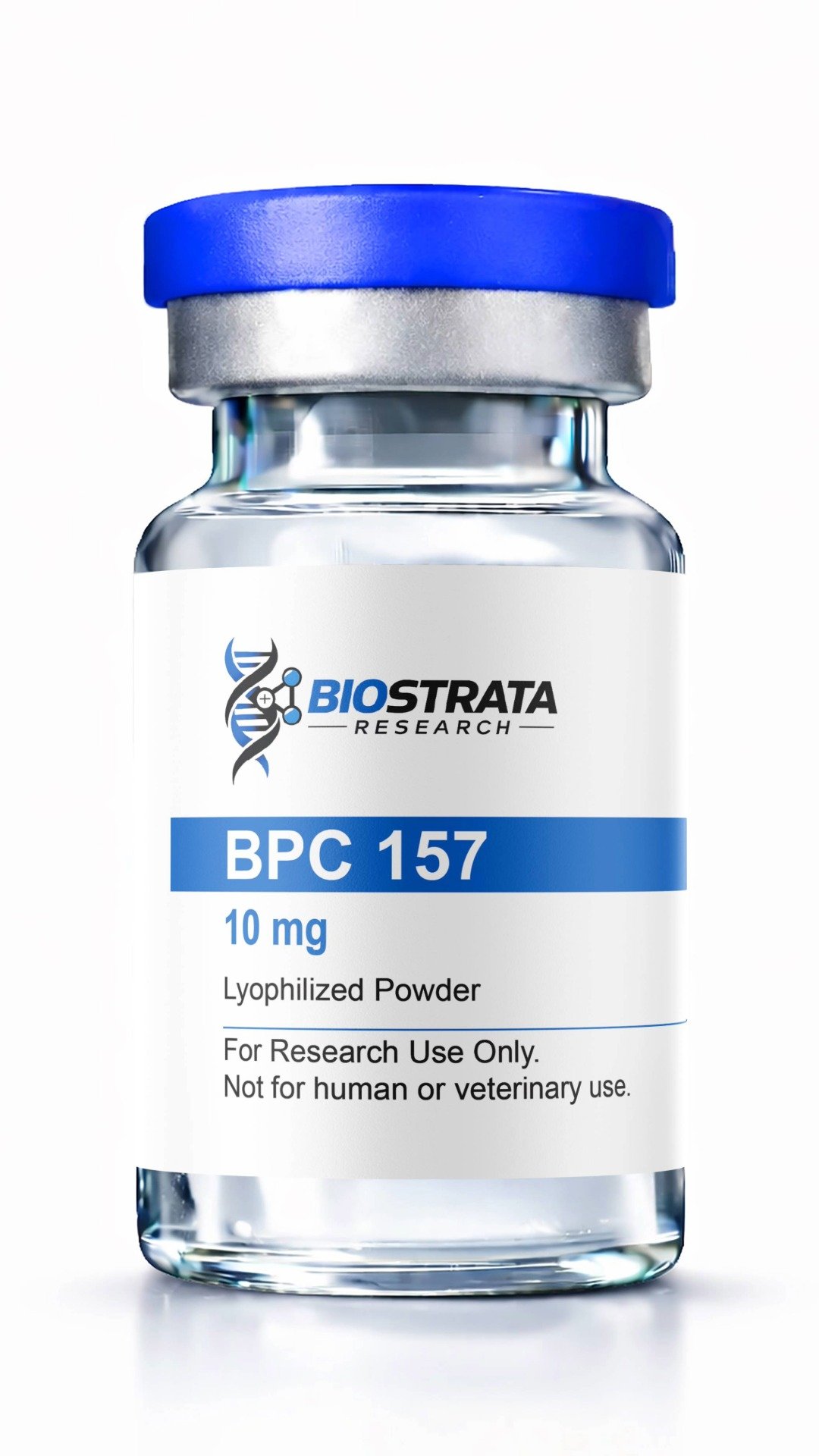
Key Research Facts: BPC-157 Research Overview
- BPC-157 is a synthetic 15-amino-acid peptide derived from a sequence found in human gastric juice protein, it does not exist in isolated form naturally in the body
- The most consistent research finding is accelerated tissue repair in rodent injury models, tendons, ligaments, muscles, and the gut lining all show faster healing compared to controls
- The primary proposed mechanism is VEGF upregulation driving angiogenesis, the formation of new blood vessels that supply injured tissue with the circulation needed for repair
- BPC-157 shows unusual stability in gastric acid compared to most peptides, a structural property that makes it particularly relevant to gastrointestinal research models
- As of 2026 BPC-157 is classified as Category 1 under FDA compounding frameworks, this is a compounding designation and not FDA drug approval, no human clinical trials have been published
What BPC-157 Is and Where It Comes From
BPC stands for Body Protection Compound. It was first identified by researchers studying a straightforward question: why doesn’t the stomach digest itself? The stomach produces acid strong enough to break down food, yet the stomach lining stays intact. Researchers found that gastric juice contains protective proteins, and they isolated a specific sequence from one of those proteins that appeared to drive much of that protective activity. That sequence became BPC-157.
What that origin story tells you is important. BPC-157 was not designed from scratch. It was found in a place where the body already uses it to protect tissue. Researchers took that naturally occurring sequence, synthesized it as a standalone 15-amino-acid peptide, and began studying what it could do in controlled research settings.
At 15 amino acids, BPC-157 is short by peptide standards. That brevity gives it two practically relevant properties. First, it is relatively straightforward to synthesize at high purity. Second, it is unusually stable in gastric acid, meaning it does not break down quickly in the digestive environment the way most peptides do. That stability is not a coincidence. It is a structural feature of a compound that originally lived in stomach acid.
BPC-157 is not a hormone, not a steroid, and not a supplement. It is a synthetic research peptide classified as Research Use Only, meaning it is produced for laboratory and analytical use only. For broader context on what research peptides are and how they differ from other compound categories, see what do peptides do.
What BPC-157 Does in Tissue Repair Research
This is the question most people arrive with, and the research has a clear answer: in rodent models, BPC-157 consistently accelerates tissue repair across a wide range of injury types. Tendons, ligaments, muscles, bones, and the gut lining have all been studied, and the results across independent research groups have been consistent enough to make tissue repair the core of the BPC-157 literature.
The mechanism the research points to most often is angiogenesis, the formation of new blood vessels. Here is why that matters. When tissue is injured, it needs blood supply to heal. Blood carries the oxygen, nutrients, and signaling molecules that repair requires. When circulation to an injury site is poor, healing slows or stalls. BPC-157 appears to upregulate VEGF, vascular endothelial growth factor, which is one of the primary drivers of new blood vessel formation. More blood vessels to the injury site means faster and more complete repair.
Tendon research has been a particular focus because tendons are notoriously slow to heal due to poor blood supply. In rodent tendon injury models, BPC-157 treated animals showed faster tendon-to-bone healing compared to controls, with angiogenesis identified as the likely mechanism. The same pattern shows up in muscle and ligament models, suggesting the mechanism is not tissue-specific but reflects something more fundamental about how BPC-157 interacts with the repair process.
For a broader look at how BPC-157 fits within the regenerative peptide research category alongside other compounds studied for similar applications, see peptides for healing and regenerative research and how peptides work at the cellular level.
The Nitric Oxide Connection: How BPC-157 May Signal at the Molecular Level
Beyond VEGF and angiogenesis, research has identified a second mechanism that may help explain how BPC-157 produces its effects: nitric oxide signaling. Nitric oxide is a molecule the body uses to regulate blood flow, manage inflammation, and coordinate tissue repair. It is not a gas you breathe in. It is a signaling molecule produced inside cells that tells blood vessels to relax and widen, improving circulation to the area where it is produced.
Several studies have proposed that BPC-157 influences nitric oxide synthase, the enzyme responsible for producing nitric oxide. If BPC-157 increases nitric oxide production at injury sites, it would improve local blood flow and vascular response, which in turn supports the angiogenesis findings from the VEGF research. These two mechanisms may not be separate explanations. They may be different points in the same signaling chain, with BPC-157 acting upstream and the vascular effects following downstream.
Studies that blocked nitric oxide production have been used to test this. When researchers inhibited nitric oxide synthase in animal models, some of BPC-157’s effects were reduced, which supports the idea that nitric oxide is part of the mechanism rather than a coincidental finding. The relationship is not fully mapped yet, but the evidence is consistent enough that nitric oxide signaling is now considered one of the key mechanistic threads in BPC-157 research.
The neurological research thread is a newer and less established area. Rodent studies have examined BPC-157’s interaction with dopamine and serotonin systems in brain injury and neurological recovery models. These findings carry less evidential weight than the tissue repair literature but have been consistent enough to sustain interest. For broader context on how neurological peptide research is structured, see cognitive and neurological research.
Gut Research: Where BPC-157 Started and What the Studies Show
Before tendon research, before nitric oxide, before neurological models, there was the gut. BPC-157’s origin is gastric juice, and the gastrointestinal research literature is where the compound has its longest and most internally consistent record. Researchers have studied it in models of gut lining damage, inflammatory bowel conditions, gastric ulceration, and gut permeability, and the findings have been reproducible enough across independent groups to represent a meaningful body of evidence.
What makes the gut research particularly notable is BPC-157’s stability in the digestive environment. Most peptides break down almost immediately in stomach acid. BPC-157 does not. That structural property means it can remain active in the gastrointestinal environment long enough to interact with gut tissue in ways that most peptides cannot. Whether that stability translates into practical research advantages in other delivery contexts is an ongoing area of investigation.
The broader pattern that has emerged from BPC-157 research is that a compound designed to study gut protection keeps showing up in unrelated biological systems. Tissue repair, vascular biology, neurological recovery, and inflammatory modulation have all emerged from what began as gastric research. That breadth suggests BPC-157 may operate at a level that influences multiple downstream systems rather than acting through a single narrow pathway. For context on how compounds studied in tissue repair overlap with immune and inflammatory research, see immune and inflammatory response research and muscle and performance research.
Tolerance is a relevant research consideration for any compound studied in extended protocols. For what the research shows on whether repeated peptide exposure affects biological activity over time, see can you build tolerance to peptides.
Regulatory Status, Research Supply, and What the 2026 Changes Mean
BPC-157’s regulatory history is worth understanding clearly because it gets misrepresented often. As of 2026, BPC-157 is classified as Category 1 under the FDA’s 503A and 503B compounding frameworks. That is a meaningful change from its 2020 Category 2 designation, which had restricted it from compounded formulations. The reclassification was part of a broader FDA policy review that moved 14 of 19 previously restricted peptides back to Category 1 status.
Category 1 means licensed compounding pharmacies can again include BPC-157 in compounded preparations under appropriate regulatory conditions. What it does not mean is that BPC-157 has been approved as a drug. No clinical trials have been completed. No safety and efficacy review through the formal drug approval process has occurred. The reclassification changed BPC-157’s compounding availability, not its standing as an unapproved compound.
For research purposes BPC-157 remains Research Use Only. That classification is separate from the compounding framework and reflects the current state of the evidence: a deep preclinical record, zero published human clinical trials, and a genuinely open question about how the animal model findings will translate when human studies eventually occur.
For what the research shows about biological offset when peptide protocols end, see what happens when you stop peptides.
BioStrata Research supplies BPC-157 as a research-grade lyophilized compound with full batch COA documentation for laboratory use only.
FAQs, BPC-157 Research Overview
What does BPC-157 actually do in research?
The most consistent finding across the preclinical literature is accelerated tissue repair. In rodent injury models, BPC-157 treated animals heal faster than controls across tendon, ligament, muscle, and gut lining injury types. The leading proposed mechanism is VEGF upregulation driving angiogenesis, the formation of new blood vessels that give injured tissue the circulation it needs to repair. Nitric oxide signaling has also been identified as a contributing mechanism in multiple studies.
Why is BPC-157 studied for tendons specifically?
Tendons have notoriously poor blood supply compared to other tissue types, which is why tendon injuries heal slowly and incompletely. BPC-157’s proposed mechanism of promoting new blood vessel formation makes it particularly relevant to tendon research. Multiple rodent tendon injury studies have shown faster healing in BPC-157 treated animals, and angiogenesis is consistently identified as the likely driver.
Has BPC-157 been tested in humans?
No formal human clinical trials have been published. All research to date is preclinical, conducted in cell culture and animal models. This is the most important context to hold when reading about BPC-157. The animal model findings are consistent and reproducible, but whether they translate to human outcomes remains an open question that only clinical trials can answer.
Is BPC-157 legal?
As of 2026, BPC-157 is classified as Category 1 under the FDA compounding framework, meaning licensed compounding pharmacies can include it in compounded preparations. It is not approved as a drug. For research purposes it is classified as Research Use Only. For the full regulatory picture, see the FDA peptide reclassification: what actually changed in 2026.
How is BPC-157 different from TB-500?
Both are studied in regenerative and tissue repair research but through different mechanisms. BPC-157 works primarily through VEGF upregulation and angiogenesis, promoting new blood vessel formation at injury sites. TB-500 works primarily through actin regulation and cell migration, supporting tissue remodeling through a different pathway. The two compounds have different structural origins, different mechanisms, and different research profiles, though both appear in the healing and repair literature and are frequently studied in combination. For an overview of how researchers approach multi-compound protocols, see peptide stacks research overview. For the latest research developments, see BPC-157 in 2026: three decades of research.
- CONTINUE LEARNING
Explore Related Peptide Topics
Continue building your understanding by exploring related foundational peptide topics.
References & Sources
- Narrative Review: Regeneration or Risk? — PMC
- Systematic Review in Sports Medicine — PubMed
- Certain Bulk Drug Substances May Present Safety Risks — FDA
- BPC-157 Peptide: Experimental Risks for Athletes — USADA
- Phase I Trial of BPC-157 Safety and Pharmacokinetics — ClinicalTrials.gov
- BPC-157: Science, Safety, and Regulatory Questions — STAT News