
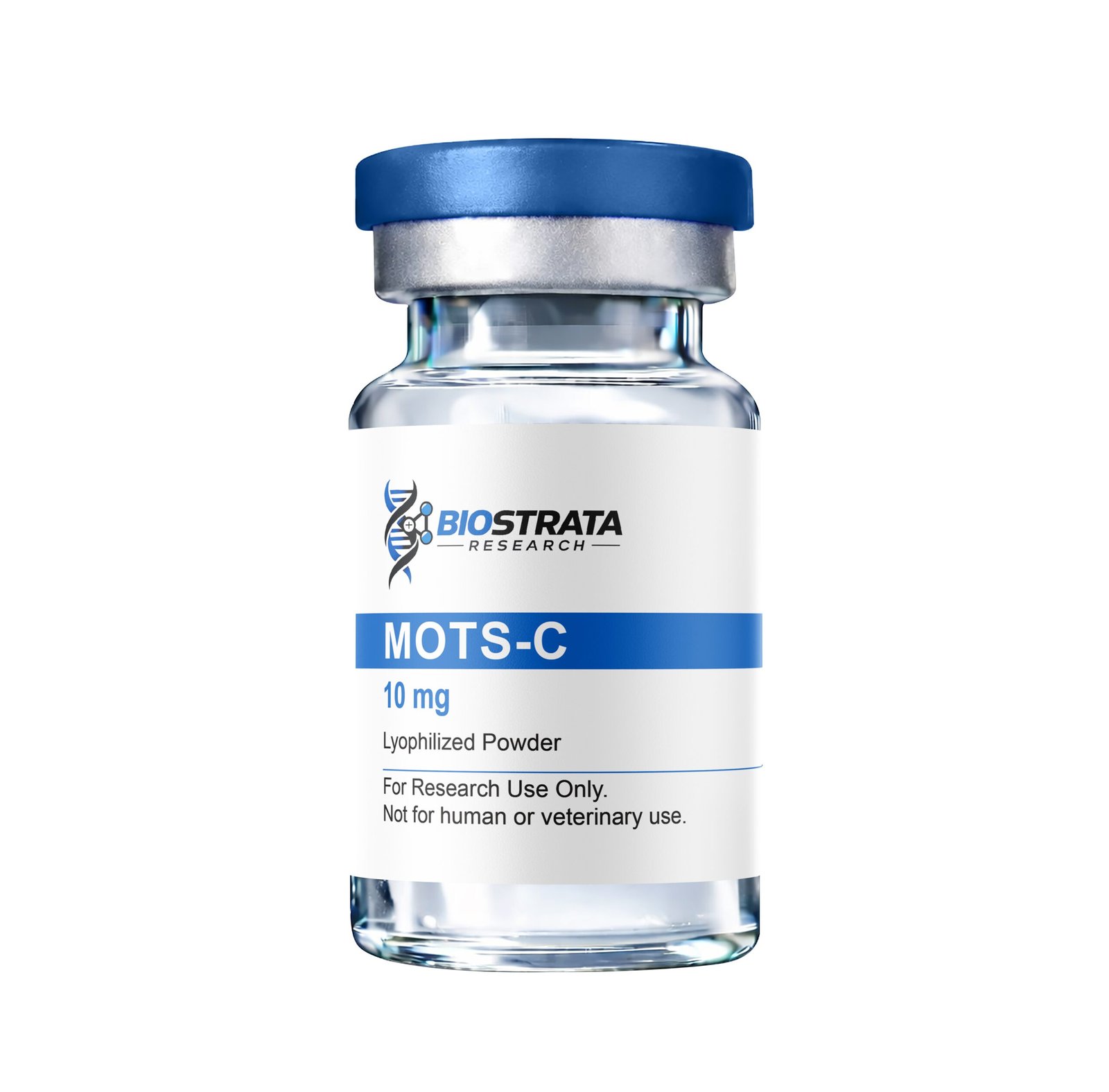
Description
Research Overview
MOTS-C is a 16-amino acid mitochondrial-derived peptide (MDP) encoded within the 12S rRNA region of the mitochondrial genome. In controlled laboratory settings, it is studied for its role in metabolic signaling, mitochondrial-to-nuclear communication, and cellular stress adaptation.
Unlike most signaling peptides, MOTS-C can translocate from the mitochondria to the nucleus in response to metabolic stress, where it regulates nuclear gene expression in an AMPK-dependent manner. This makes it a compelling subject of ongoing preclinical metabolic research.
Explore related peptide research in our Research Library, or dive deeper into the full MOTS-C Research Overview.
Scientific Background
MOTS-C was first characterized as a short open reading frame (sORF) within mitochondrial DNA, encoding a peptide that regulates insulin sensitivity and metabolic homeostasis, with skeletal muscle identified as its primary target organ. Research has since expanded to explore its broader role in energy utilization, intracellular stress signaling, and age-related metabolic decline.
Circulating MOTS-C levels have been detected in plasma across multiple tissue types, with concentrations that decline with age. This finding has driven significant scientific interest in its relationship to longevity and metabolic aging research.
Molecular Information
- Peptide Type: Mitochondrial-derived signaling peptide (MDP)
- Amino Acid Length: 16 amino acids
- Gene Origin: Mitochondrial 12S rRNA short open reading frame (sORF)
- Research Classification: Experimental metabolic research compound
Quality & Compliance
Each batch undergoes analytical verification to confirm identity and purity, and batch-specific Certificates of Analysis (COA) are maintained for every production run. This product is supplied strictly for laboratory research and is not for human or veterinary use.



Reviews
There are no reviews yet.