
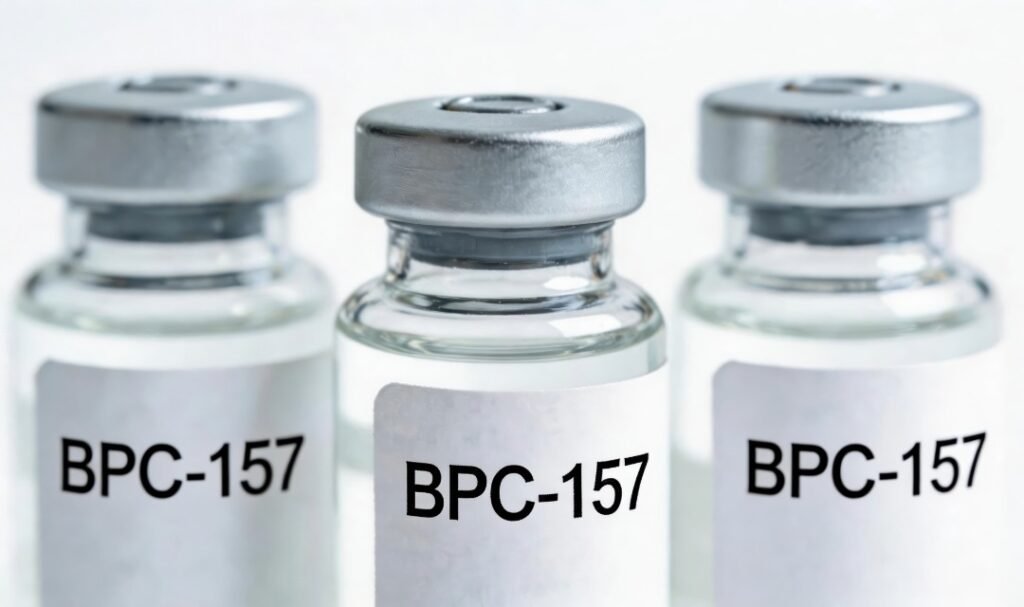
To explore how peptides are studied and applied across different research areas, visit our Research Library.
BPC-157 has accumulated more preclinical research than almost any compound in the peptide space. A 2025 systematic review published across PubMed, Cochrane, and Embase identified 544 published articles on the compound spanning 1993 to 2024. PubMed indexed over 180 BPC-157 results in 2025 alone — a fourfold increase from just 45 results in 2020. And yet, as of early 2026, not a single completed human clinical trial has been published in a peer-reviewed journal.
That gap is the defining story of BPC-157 research right now.
The compound itself is a synthetic 15-amino acid peptide derived from a protective protein found in human gastric juice — the same fluid that produces acid strong enough to dissolve metal, yet leaves the stomach wall intact. Researchers studying that paradox identified BPC-157 as a key factor in the stomach’s protective response, and the name “Body Protection Compound” followed from there. First characterized by Professor Predrag Sikiric and colleagues at the University of Zagreb in the early 1990s, it has since been investigated across gastroenterology, orthopedic medicine, neurology, and regenerative biology.
The preclinical data is consistent and broad. Across 36 animal studies reviewed in a 2024 systematic review published in HSS Journal, BPC-157 promoted healing in muscle, tendon, ligament, and bone injury models by boosting growth factors, supporting angiogenesis through the VEGFR2-Akt-eNOS pathway, and organizing a more efficient inflammatory response during early healing phases. In tendon and ligament transection models specifically, treated animals showed reduced postinjury contracture and restored motor function indices. In one fracture model, BPC-157 performed comparably to autologous bone marrow injection for promoting callus mineralization. BPC-157 is often discussed alongside compounds like TB-500, which are also being explored for their role in tissue repair and recovery.
What makes BPC-157 scientifically unusual isn’t just the volume of data, it’s the stability. Most synthetic peptides degrade rapidly. BPC-157 remains structurally intact in conditions that would destroy similar compounds, including in human gastric juice for more than 24 hours, which means it retains research viability across multiple administration routes.
The human data, by contrast, is thin. As of early 2026, exactly three published human studies exist: a retrospective knee pain case series, a small pilot on interstitial cystitis, and a two-person IV safety pilot. None include control groups. The gap between the preclinical depth and the near-absence of clinical trials likely reflects a combination of regulatory barriers, limited pharmaceutical industry interest due to patentability challenges, and until recently, a restricted legal status that discouraged institutional research. BPC-157 has been widely studied across multiple biological systems — detailed in our BPC-157 Research Overview.
That last point just changed. In February 2026, HHS Secretary RFK Jr. announced that BPC-157 is among the 14 peptides expected to be moved from the FDA’s Category 2 restricted list back to Category 1, which would restore the ability of licensed compounding pharmacies to prepare it under physician supervision. The formal reclassification has not yet been officially published as of March 2026, but the direction is clear.
For researchers, the practical takeaway is straightforward: BPC-157 has one of the most extensive preclinical profiles in the field, a favorable safety record across animal models with no identified lethal dose, and a regulatory environment that may finally be opening a pathway toward the human clinical data the compound has always needed.
BPC-157 Research in 2026: What the Latest Studies Reveal — Bralad, 2026