
Most weight loss research spent decades producing modest results. Lifestyle interventions, older medications, even early GLP-1 compounds rarely moved the needle past 5 to 6% body weight reduction. Tirzepatide changed that. It is a dual incretin receptor agonist, meaning it activates two separate hormonal pathways at once instead of one, and the clinical results from the SURPASS and SURMOUNT trial programs were significant enough to force researchers to recalibrate what metabolic compounds are actually capable of. For context on the GLP-1 side of that mechanism and how the incretin class works as a whole, see what GLP-1 peptides are.
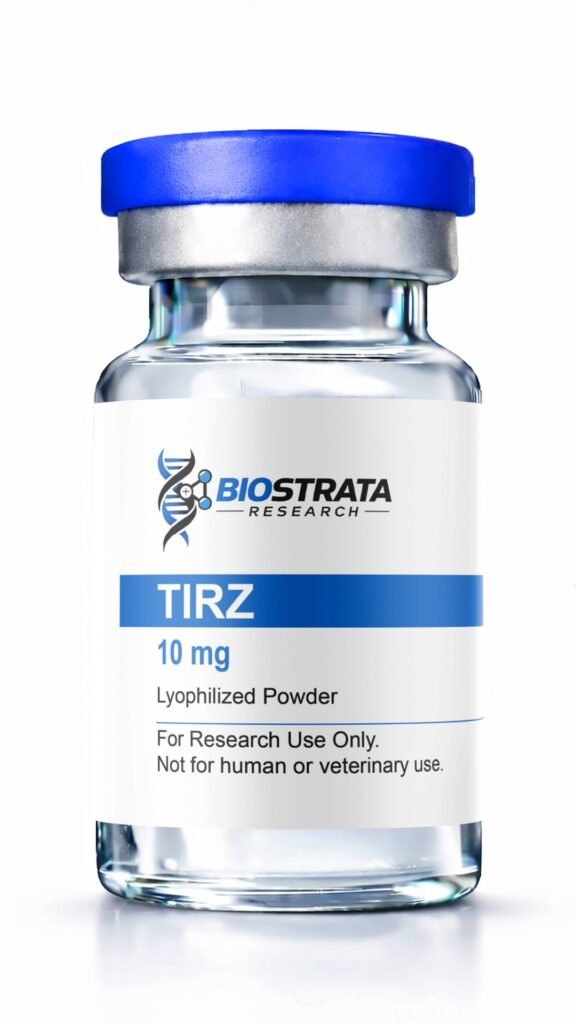
Tirzepatide: Key Research Facts
- Tirzepatide activates two hormonal pathways simultaneously, GIP and GLP-1, making it mechanistically different from every GLP-1 compound that came before it.
- In a direct head-to-head trial against semaglutide, tirzepatide produced superior results on both blood sugar reduction and body weight at every dose tested.
- The SURMOUNT-1 trial reported average body weight reductions of 20.9% over 72 weeks in adults without diabetes, the largest ever recorded for an approved pharmaceutical agent at the time.
- Tirzepatide has since expanded into sleep apnea, heart failure, and metabolic liver disease research, reflecting how broad its downstream effects appear to be.
- It is now the benchmark against which the next generation of triple agonist compounds like retatrutide are being measured, the same role semaglutide played before tirzepatide arrived.
Two Receptors, One Molecule
Your gut produces two hormones after you eat. GLP-1 and GIP. Both signal your pancreas to release insulin, both help regulate how much you eat, and both influence how your body handles blood sugar. The difference is what each one does beyond that core function.
GLP-1 works primarily in the brain and gut. It suppresses appetite, slows digestion, and tells your hypothalamus you have had enough to eat. Every GLP-1 compound studied before tirzepatide targeted this pathway alone.
GIP works differently. It acts on fat tissue, modulates energy storage, and appears to amplify the appetite-suppressing effects of GLP-1 when both are active at the same time. Before tirzepatide, most researchers considered GIP a secondary player. The clinical data changed that view significantly.
Tirzepatide activates both receptors in a single weekly injection. But the way it does this is deliberately unequal. Its affinity at the GIP receptor matches native GIP closely. Its affinity at the GLP-1 receptor is intentionally weaker, roughly 18 to 20 times weaker than native GLP-1. Researchers call this imbalanced agonism, and current evidence suggests the asymmetry is central to why tirzepatide works the way it does rather than a design limitation.
A fatty acid chain modification binds tirzepatide to albumin in the bloodstream, extending its active window to approximately five days and making once-weekly dosing practical in research models. That albumin-binding approach is also why tirzepatide, like all current incretin compounds, is administered by injection rather than orally. For a full breakdown of the bioavailability challenges that make oral peptide delivery so difficult and what the research shows on solving them, see oral peptides research: the bioavailability challenge. For a full breakdown of how GLP-1 receptor signaling works at the cellular level, see how GLP-1 peptides work.
What the Clinical Trials Actually Showed
The SURPASS program was five large trials designed to test tirzepatide across different populations and comparators. The headline finding across all five at the 15mg dose was HbA1c reductions of up to 2.58% and body weight reductions of up to 11.7kg. Those numbers were described in the research literature as unprecedented for a single metabolic agent at the time.
The most significant trial for understanding what tirzepatide actually adds is SURPASS-2. It ran tirzepatide directly against semaglutide 1mg under head-to-head conditions, one of the only controlled comparisons of dual versus single incretin agonism in the published literature. Tirzepatide won on both blood sugar reduction and body weight at all three doses tested. At 15mg, participants lost on average 5.5kg more than the semaglutide group.
The SURMOUNT program then asked what happened when tirzepatide was studied specifically in people with obesity but without diabetes. SURMOUNT-1 enrolled 2,539 adults and at 72 weeks reported average body weight reductions of 20.9% at the 15mg dose. More than half of participants lost 20% or more of their body weight. That was the largest reduction ever documented for an approved pharmaceutical agent at the time of publication.
To put that in context: previous GLP-1 compounds were considered strong performers at 5 to 6% body weight reduction. Semaglutide pushed that to around 15%. Tirzepatide pushed it again to nearly 21%. Each generation is not just incrementally better. The gap is meaningful. For a side-by-side breakdown of how these results compare to semaglutide’s STEP trial data, see tirzepatide vs semaglutide.
Beyond Weight Loss: Where the Research Is Expanding
Once a compound’s core mechanism is established, researchers tend to follow the biology into downstream conditions. With tirzepatide, that expansion has been unusually broad.
Obesity rarely exists alone. It drives cardiovascular disease, disrupts sleep, damages the liver, and strains the kidneys. Tirzepatide’s SURMOUNT program extended into each of these areas, and the results have been significant enough to reshape how researchers think about metabolic intervention beyond weight and blood sugar.
The SURMOUNT-OSA trial studied tirzepatide in adults with moderate to severe obstructive sleep apnea and obesity. The results led to tirzepatide becoming the first pharmacological treatment approved specifically for sleep apnea by the FDA in 2024. That is not a minor footnote. Sleep apnea has historically had no effective pharmaceutical option, and the connection to metabolic dysfunction was understood but never translated into an approved compound-based intervention until this trial.
The SUMMIT trial investigated tirzepatide in heart failure with preserved ejection fraction, a form of heart failure that is difficult to treat and has historically had very limited options. Additional research arms are examining metabolic liver disease, chronic kidney disease progression, and cardiovascular outcomes.
The pattern across all of these is the same. The receptor activity that reduces body weight and improves insulin sensitivity appears to produce downstream benefits across multiple organ systems simultaneously. Researchers are still mapping exactly which mechanisms drive each of those effects and how durable they are over time. For context on where the next generation of triple agonist compounds is taking this research, see the retatrutide research overview.
Side Effects: What the Data Shows
Tirzepatide’s side effect profile follows the same pattern seen across the incretin class. Gastrointestinal effects are the most common, they are concentrated during dose escalation, and they resolve in most participants once the maintenance dose is reached.
Nausea, diarrhea, vomiting, and constipation are the most frequently reported events across both SURPASS and SURMOUNT trials. These are not random. They are mechanistically predictable. Slowing gastric emptying is part of how tirzepatide works, and the gut takes time to adapt to that change. The escalation schedule built into research protocols, starting low and increasing the dose every four weeks, exists specifically to give the body that adaptation window before full receptor occupancy is reached.
Beyond gastrointestinal effects, mild injection site reactions are common and transient. A small mean increase in resting heart rate has been observed, consistent with what is seen across GLP-1 compounds generally. Decreased appetite is expected and mechanistically driven.
Serious adverse events are infrequent. Pancreatitis was reported at low absolute rates. Gallbladder events occurred at rates consistent with other weight loss interventions. Hypoglycemia risk is low because tirzepatide’s insulin-stimulating effect is glucose-dependent, meaning it does not push insulin release when blood sugar is already stable.
Across the SURPASS program, serious adverse event rates were consistent with or lower than comparator arms once escalation was complete. The side effect burden is real during titration but manageable for most participants when the escalation is followed as designed. For a full comparison of how GI and systemic effects compare across tirzepatide and other compounds in the incretin class, see GLP-1 peptides: common side effects observed in research.
Tirzepatide in the Research Landscape
Tirzepatide now sits at the center of incretin research. It outperformed the previous generation in head-to-head data. It set new benchmarks for weight reduction in dedicated obesity trials. And it is the foundation against which the next generation of triple agonist compounds is now being measured.
For researchers studying incretin pharmacology, tirzepatide represents the most extensively documented dual receptor model currently available. The combination of GIP and GLP-1 co-activation, with its intentionally imbalanced affinity profile, gives researchers a well-characterized tool for studying what dual incretin biology produces beyond single-receptor activation alone.
The research progression from here is already underway. Retatrutide adds a third receptor, the glucagon receptor, to the GIP and GLP-1 foundation tirzepatide established. Early Phase 2 data is showing weight reductions that exceed both predecessors, with no plateau observed at the end of the 48-week trial window. Tirzepatide’s role in that progression is as the established benchmark, the compound every newer molecule has to beat to justify its existence as a research advance. For the full triple agonist profile, see why GLP-1 weight loss plateaus. For a full breakdown of the technical vocabulary used across dual and triple incretin research, including terms like receptor agonism, imbalanced affinity, GIP co-activation, and pharmacodynamics, see understanding peptide research terminology.
BioStrata Research supplies tirzepatide 10mg as a verified research-grade compound with full batch-specific analytical documentation. For researchers working across the dual and triple agonist landscape, retatrutide 10mg is also available for comparative research protocols. All products are strictly for laboratory research use only.
FAQ — Tirzepatide Research
How does tirzepatide produce more weight loss than semaglutide?
Tirzepatide activates both GIP and GLP-1 receptors simultaneously. Semaglutide targets only GLP-1. The addition of GIP receptor activity appears to amplify appetite suppression and influence fat tissue metabolism in ways single-receptor agonism does not. In the SURPASS-2 head-to-head trial, tirzepatide outperformed semaglutide 1mg on both blood sugar and body weight at every dose tested. For the full data comparison, see tirzepatide vs semaglutide.
How much weight loss does tirzepatide produce?
SURMOUNT-1 showed average body weight reductions of 20.9% at 72 weeks in adults without diabetes at the 15mg dose. More than half of participants lost 20% or more of their body weight. Results vary based on dose, baseline metabolic health, and adherence to the escalation protocol.
What are the most common side effects?
Nausea, diarrhea, vomiting, and constipation are the most frequently reported, concentrated during the dose escalation phase and resolving in most participants once maintenance dosing is reached. Serious adverse events are infrequent and consistent with comparator arms across SURPASS trial data.
Why does weight come back when tirzepatide is stopped?
The metabolic effects of tirzepatide depend on continued receptor engagement. When the compound is discontinued, appetite signaling returns toward baseline and the body’s set point defense mechanisms drive weight regain. SURMOUNT-4 data confirmed that stopping tirzepatide leads to substantial weight regain within 52 weeks. The biology behind that pattern is covered in detail in what happens when you stop peptides.
What comes after tirzepatide in metabolic research?
Retatrutide adds glucagon receptor activation to the GIP and GLP-1 foundation tirzepatide established. Phase 2 data published in the New England Journal of Medicine showed mean weight reductions of up to 24.2% at 48 weeks with no plateau observed at trial end. For the full profile, see why GLP-1 weight loss plateaus.
- CONTINUE LEARNING
Explore Related Peptide Topics
Continue building your understanding by exploring related foundational peptide topics.
References & Sources
- Tirzepatide: A Dual GIP/GLP-1 Receptor Co-Agonist for Type 2 Diabetes — Cardiovascular Diabetology
- Tirzepatide as a Biased Dual GIP and GLP-1 Receptor Agonist — JCI Insight
- Mechanism of Action of Tirzepatide — Diabetes Therapy
- Efficacy and Safety of Tirzepatide: A Systematic Review and Meta-Analysis — Diabetology & Metabolic Syndrome
- Therapeutic Spectrum of Tirzepatide in Metabolic and Cardiovascular Health — International Journal of Endocrinology
- Tirzepatide Once Weekly for the Treatment of Obesity (SURMOUNT-1 Trial) — New England Journal of Medicine
- Pharmacokinetics and Drug Interactions of GLP-1 Receptor Agonists and Tirzepatide — Journal of Pharmaceutical Sciences
- Comparative Safety and Side Effects of Semaglutide and Tirzepatide — Biomedicine & Pharmacotherapy
All references are provided for educational and research context only. Compounds discussed are investigational or subject to clinical evaluation and are not intended for general therapeutic use.